The Balance Concept
Why balance comes before everything else

Most health strategies begin with actions. What to take. What to add. What to change next.
The Balance Concept begins one step earlier.
It looks at the conditions your body is working under — because without the right conditions, even good choices often work unpredictably.
What “essential” really means
Omega-6 and omega-3 fatty acids are both described as essential.
That simply means your body needs them — and cannot produce them on its own. They must come from food.
But “essential” does not mean unlimited. And it does not mean that more is always better.
Omega-6 and omega-3 are used in the same places in the body, at the same time. They share biological space, compete for the same enzymes, and influence the same systems.
That’s why their relationship matters.
Where balance becomes physical: the cell membrane
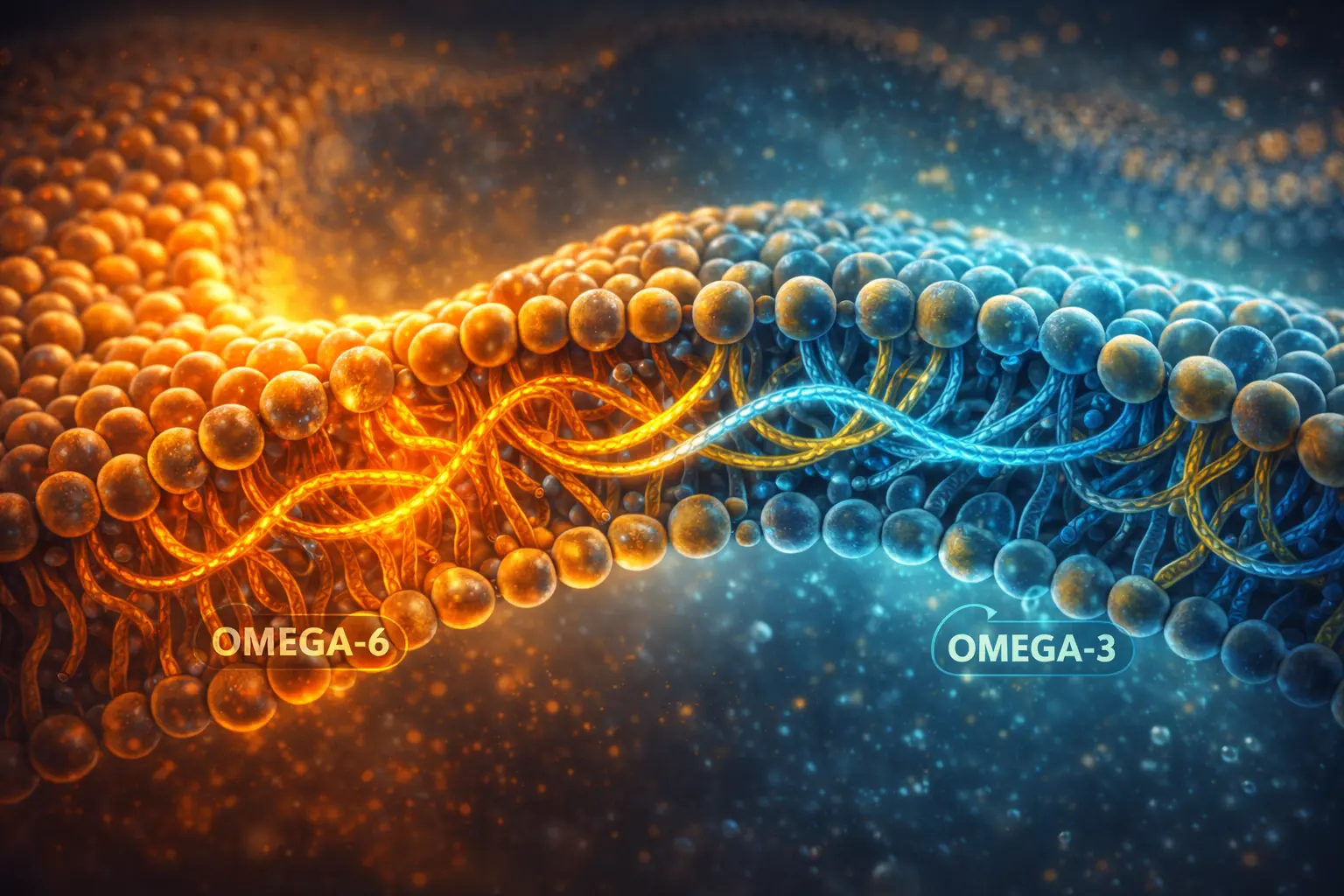
Every cell in your body is surrounded by a membrane largely built from fatty acids.
That membrane is not passive. It actively decides:
- What nutrients move into the cell
- What waste products move out
- How signals are received
- How flexible and responsive the cell remains over time
When fatty-acid balance shifts, the membrane’s properties shift with it.
Membranes built from more rigid fats tend to become stiffer. More balanced membranes tend to support flexibility.
That flexibility matters — because cells constantly adapt to stress, signals, and changing demands.
This is why balance isn’t an “add-on later”. It’s part of the baseline your biology operates from.
How modern food patterns changed the ratio
Historically, omega-6 and omega-3 came from whole foods in more balanced proportions.

Not because diets were “perfect” — but because fats mainly came from natural sources: wild fish, grass-fed animals, and traditional oils used in moderate amounts.
Over time, food production changed.
Modern diets now rely heavily on refined seed oils — cheap, shelf-stable, and easy to scale. These oils are rich in omega-6 and appear widely in processed foods, restaurant meals, and ready-made products.
Omega-6 also increased indirectly through animal feed, which can influence the fatty-acid profile of animal-based foods.
At the same time, omega-3 intake has generally declined for many people — especially from fatty fish and other omega-3-rich sources.
From an evolutionary perspective, humans likely developed on diets with a much lower omega-6 : omega-3 ratio than what many people get today.
Today, estimates for Western diets are often around 15:1 or higher, while research frequently discusses 3:1 or below as a more balanced range.
The result isn’t that omega-6 is “bad”. It’s a long-term shift in proportion — where omega-6 tends to dominate and omega-3 is often relatively low.
That’s why the omega-6 : omega-3 ratio became a useful signal: a practical way to describe how modern food patterns may shape the internal conditions the body adapts to.
Why adding more often feels unclear
Many people add omega-3 without ever knowing their starting point.
If results feel inconsistent, the assumption is often that the dose was wrong, the product wasn’t strong enough, or the timing wasn’t optimal.
But the underlying relationship was never addressed.
Balance isn’t about maximizing intake. It’s about restoring proportion.
Why stability matters before absorption
Omega-3 fatty acids are biologically active — and fragile.
They react easily to oxygen, light, and heat. This matters not only during storage, but throughout the entire journey: from production, to digestion, to uptake.
If fatty acids break down too early, they don’t disappear — they simply lose their intended structure.
Stability is therefore not a detail. It’s a prerequisite.
How polyphenols support a more protective environment

For many years, omega-3 oils have relied mainly on vitamin E for protection.
Vitamin E works — but it reacts quickly and is used up in the process. That makes it effective as a single-event shield, but less suited to protecting delicate fats across time and multiple stages.
Polyphenols are naturally occurring compounds found in plants and marine environments.
In nature, delicate fats are rarely left unprotected. They exist within complex protective environments — not isolated antioxidants.
Polyphenols help support that kind of environment. Rather than reacting once and disappearing, they contribute to ongoing protection across time and conditions.
This shifts the focus from what happens in the bottle to what happens along the entire path — including digestion and cellular use.
Polyphenols don’t create balance on their own. But they help preserve the structure of fatty acids long enough for balance to matter.

Why structure and time are part of the logic
Fatty acids don’t change the body overnight.
They become part of cell membranes — and those membranes renew gradually. Red blood cells, for example, have a lifespan of around 120 days.
That means meaningful changes in fatty-acid balance are reflected over time, not instantly.
This is why one-off approaches rarely tell the full story.
Consistency matters — not as a marketing model, but as a biological one.
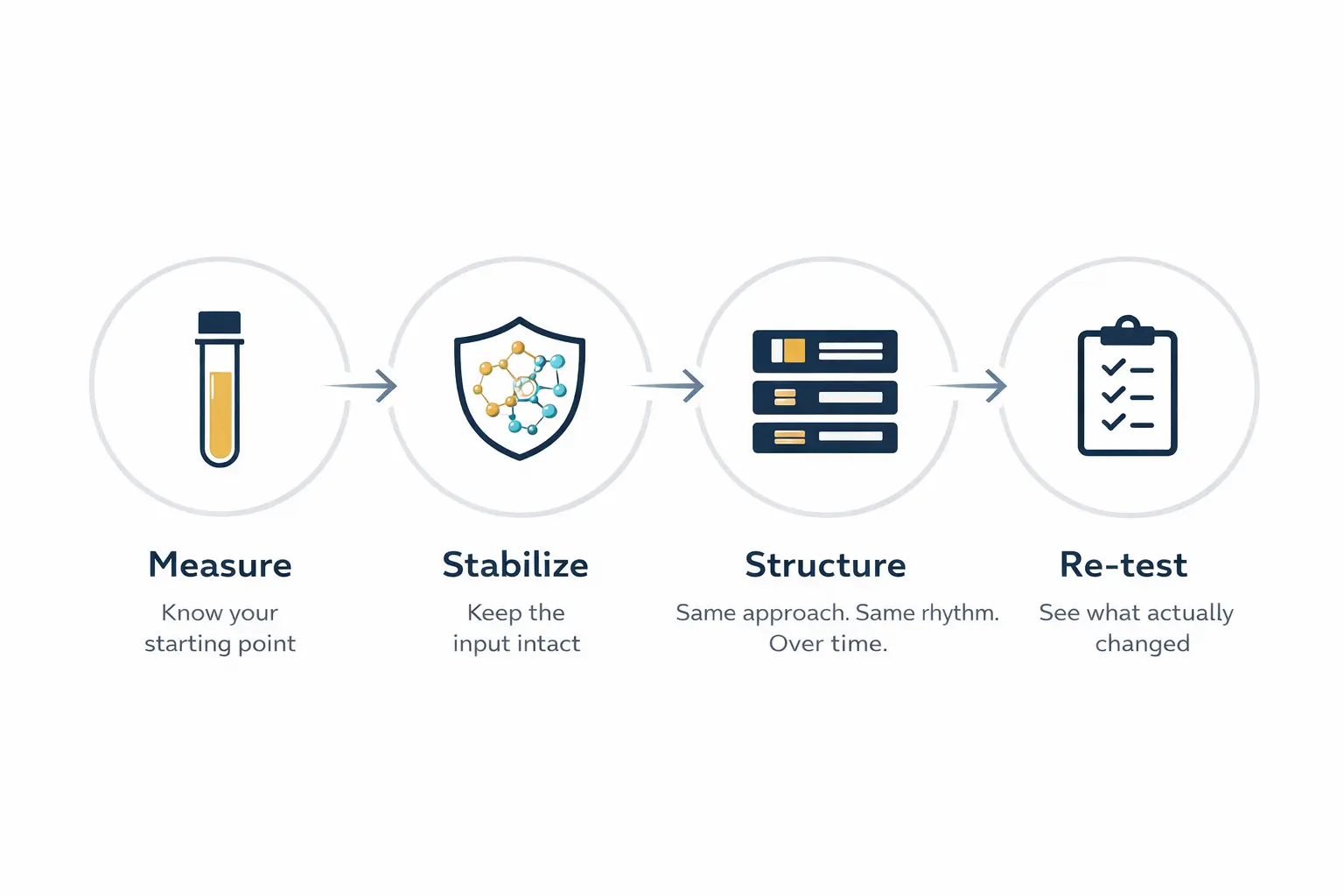
Without stability, results become unreliable. Without structure, progress becomes hard to follow and confirm.
Where to go deeper
Want the full system view — how testing, balance, and next steps connect? See the in-depth explanation on Balance Concept .
Balance is not the finish line
Balance is not the goal you chase after everything else is done.
It’s the starting condition that shapes how the system responds.
When balance is understood and supported, it becomes the foundation the body is designed to work from — and then other nutritional choices start to make more sense.
Not because balance fixes everything — but because it restores the conditions your body is designed to work with.
When the foundation is in place, the whole system can work together
Omega-6 : Omega-3 balance creates the conditions your body is designed to work from. Once that foundation is supported, you can begin working with the full picture — not isolated nutrients, but a coordinated approach.
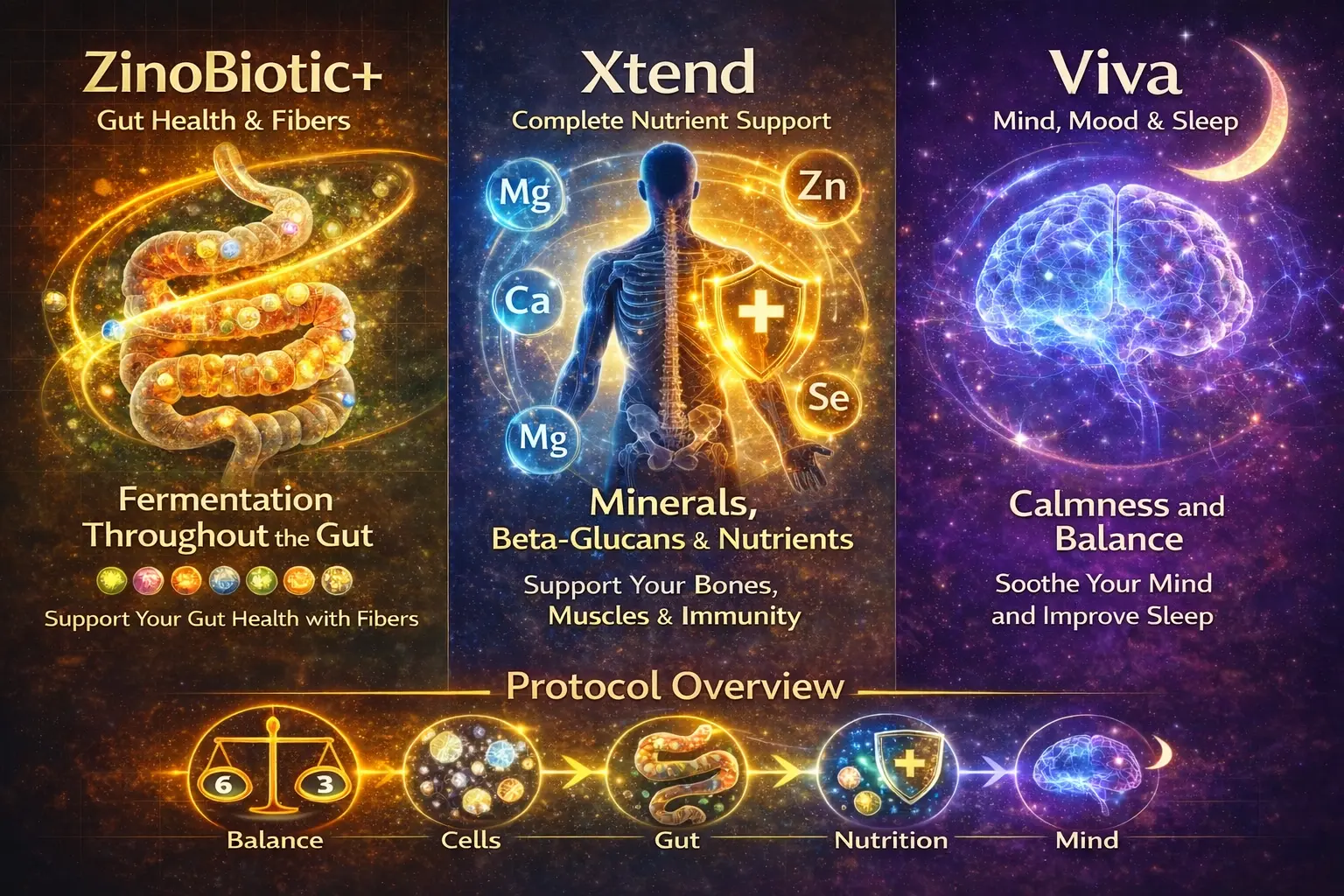
This is where the Health Protocol comes in. It shows how testing, balance and daily routines are combined into a structured, tailored system that works in synergy with your balance over time.